
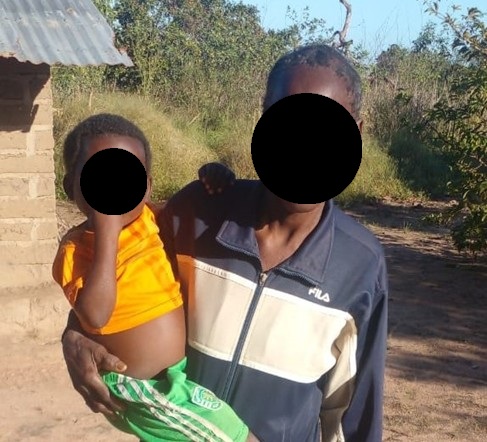
Please note: The names in these stories have not been changed. We have permission to use photos and names and are doing so for this report. However, if these will be used for wider distribution, we prefer to change the names and blur the faces in the photos.
There is an old saying “hope is last to die”, which is a source of inspiration for many Mozambican families, especially those living in rural areas. Gerilson, a young boy under 5 years old, was born with HIV and lives in Moma, a district over 200 kilometers from Nampula City.
Gerilson’s eyes conveyed his dreams of having fun with other children and going to school, but these dreams were jeopardized by HIV. His family’s eyes also betrayed their loss of hope, as they expected the worst.
Gerilson’s family was identified at a health facility and enrolled in the USAID FILOVC-AMASI program at the end of 2022. When Aires Ligorio met Gerilson, there was little to no hope. For his family, hope had already ceased to be part of their lives because they believed that nothing more could be done. The boy was malnourished, weak and underweight for his age, with his weight dropping inexplicably.
Despite his deteriorating condition, Gerilson’s grandmother still maintained a glimmer of hope that she would see her grandson play like other children. She felt something could be done, and even promised 100 meticais to anyone who could improve the situation. “My grandson’s condition was (getting) worse. He lost his appetite and weight constantly. He was tired without doing anything. He had no energy to play and was skinny. There were only bones left to the point that we believed that he was going to die and we started preparing for his funeral,” explained the elderly woman.
After the child was enrolled in USAID FILOVC-AMASI, he began receiving family-centered comprehensive case management services. The project assigned a Case Manager who visited the socilto support ART adherence, explaining how to take medication correctly, improve nutrition and attend with medical appointments at the health facility. Since Gerilson was malnourished, he was enrolled in the health facility’s Children in Crisis program and received intensive nutritional therapy and supplements. AMASI also provided money from their social emergency fund to help with food.
During these follow-up visits, the little boy’s family became hopeful again and Gerilson’s condition improved, exceeding all expectations. Like other children his age, Gerilson now plays and even helps with household activities. His energy shows that the treatment is having an effect and gives him and his grandmother confidence about a brighter future.
In a green environment, surrounded by vegetables and some other agricultural crops, while the domestic animals peck at each other, the caregiver sees her grandson enjoying the freedom and joy of being able to enjoy life happily and concludes: “I was so desperate, promising something that I did not even know if I would ever be able to pay. I did not think that my grandson would be alive. Today I feel happy, because my grandson has recovered. He plays, goes with me to the farm and comes back when he wants. I thank FILOVC for helping to improve my grandson’s life. Koshukuro!”